

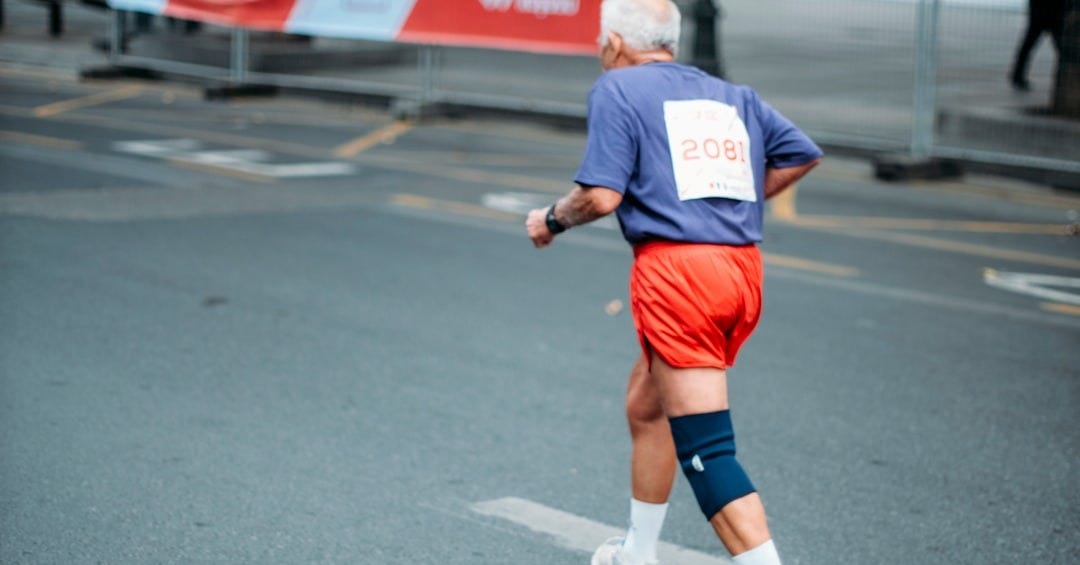
We all want to kick-ass into our 90s. Nobody is raising their hands for twenty years of doctor’s visits and endless medications and those walkers with tennis balls on the feet. The challenge, really, is the how.
How do we avoid becoming a burden? How do we stack the odds in favor of vitality and viability? How do we, as the British-American anthropologist Ashley Montagu once said, die young, as late as possible?
In pursuit of answers, it can be easy to stay up in the clouds. To read the books and listen to the pods and follow all the right people on Instagram.
It’s also easy to major in the minors, as our friend EC Synkowski likes to say. To focus on the little things instead of the big things — the supplements instead of the diet, the cold plunges instead of the sleep, the program instead of the consistency.
At the end of the day, though, only one thing creates the opportunity for long-term health: how you spend your time, energy, attention, and money…today. Not what you plan to do tomorrow. Not what you did yesterday. Or what you were supposed to do, or should’ve done, or almost did.
What did you do today?
The further we drift from that singular question, the further we drift from the path that will allow us — with some real dollops of luck along the way — to kick ass into our 90s.
There are no guarantees, of course. No magic health stack eliminates disease or real risk. But there are some best practices that Ben and I have talked about plenty before. Call them whatever you want — first principles, non-negotiables, keystone habits, must-do’s, essentials, big rocks — but just make sure you call on them often.
Your list might differ, of course, but perhaps this list of 10 will help spark your own list of daily actions, across each of the Five Factors of Health:
💪🏾 Train
1. Get through a full range of motion
You need to maintain the mobility you were born with. That means working your hips and shoulders - the two joints that matter most.
Can you squat below parallel with your heels on the ground? Can you get your arms completely overhead without your rib cage flaring open?
If not, that’s your daily work. Stretch, do yoga, use Crossover Symmetry, hit up GoWOD - whatever it takes to preserve that range of motion.
2. Do something that gets you out of breath
Some sort of higher-intensity aerobic activity. This trains your metabolic system, your aerobic capacity, and your respiratory health. All critical for aging well.
3. Build strength
You need to preserve muscle. As you age, muscle loss is one of the biggest threats to your functionality and independence.
🍏 Eat
4. Avoid ultra-processed foods
This sounds obvious, but we’d all be surprised at how much ultra-processed food we actually eat.
Lightly processed is fine — canned tuna, cold cuts, that kind of thing. But the Doritos, the cookies, the stuff where you can’t identify what it originally was? That’s what you need to cut out.
💡 Think
5. Recognize your triggers in real time
This is the real work. Not journaling, not meditating — though those are practice for this.
Your mind tends to default to one of three states. Most of us spend most of our time fragmented — scattered, replaying an awkward conversation, running through tomorrow’s to-do list, half-thinking about five things at once, none of which is the thing actually in front of you.
A more elevated state is focus — attention on one single thing. And focus is the gateway to flow, the state where your best performances happen. Fragmented, focused, flow: that’s the spectrum. Meditation, journaling, breath work, prayer, time in nature — all of it is really just practice for the same underlying skill, which is noticing when you’ve drifted into fragmentation and pulling yourself back toward focus.
Can you feel it happening when something triggers you? When you’re getting knocked off center? Until you can recognize yourself being triggered in the moment, you haven’t really done the work yet.
Everything else is just preparation for this.
6. Never whine, never complain, never make excuses
Ben’s been chanting this one for as long as I’ve known him (and probably much longer than that).
Complaining and blaming keep you fragmented — they’re the mental equivalent of standing still. The goal is to move from fragmented to focused, and you can’t do that if you’re constantly making excuses for your circumstances.
🛌 Sleep
7. Get 8-9 hours of sleep
Not 7. Not “in bed for 8 hours.” Actual sleep - 8 to 9 hours.
If you wear a sleep tracker, you know your actual sleep time is usually about an hour less than your time in bed. So if you want 8 hours of sleep, you need to be in bed for 9.
8. Start your bedtime routine right after dinner
Two things tend to eat into that window without you noticing: caffeine too late in the day, and screens too close to bed.
Caffeine’s half-life is different for everyone, but for all of us, drinking it in the afternoon has some detrimental effect on sleep. And once dinner’s over, it’s easy to flip on the TV or start scrolling — and lose two and a half hours without realizing it. Suddenly it’s 10:30, and you’re just starting to wind down.
If you want 8-9 hours of actual sleep, protect that window. Start winding down as soon as dinner is done — reading, a walk, whatever gets you there earlier than you think you need to.
🤝🏽 Connect
9. Feel what they feel
The connect factor is about relationships with others, with yourself, and with nature. Of those, relationships with others might be the most important.
To build deeper, more meaningful connections, you want to try and feel what other people are feeling. Not to judge them. Not to immediately label what they’re going through.
Just try to understand. Try to get inside their experience.
10. Don’t judge
This applies to others and to yourself.
Instead of jumping straight to “you’re wrong” or “I’m stupid,” transfer that energy into trying to understand. Understand the other person, the moment, the situation.
Reduce judgment wherever you can. That’s where real connection lives.
A Parting Thought
None of these require you to be perfect. We’re not fans of absolutes — you don’t need to do these things 100% of the time to see benefits.
But if you can hit most of these most days? You’re going to be in really good shape for a really long time. And that’s the whole point.
(If you want a simple way to actually track whether you’re hitting these day-to-day, week-to-week, this is exactly the problem I built ChaseTracker to solve. You don’t need the app to put any of this into practice — but it’s been the single biggest thing keeping me from drifting from these kinds of practices.)